
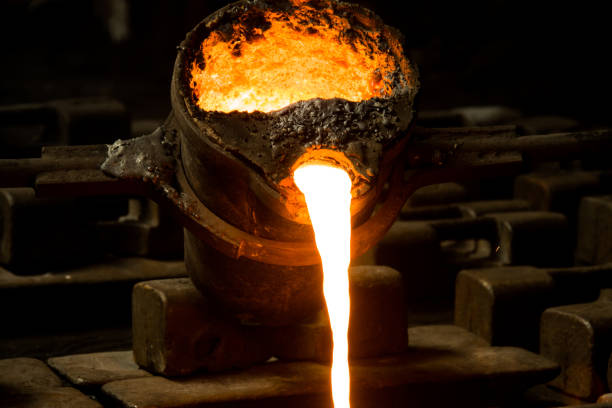
Sand casting is a casting process with a long history and wide application. By pouring molten metal into a sand mold and allowing it to cool and take shape, it produces parts with complex shapes. Due to its characteristics of low cost, high flexibility, and wide applicability, sand casting occupies an important position in industrial manufacturing. The following will discuss in detail the characteristics of the sand casting process and its applications in various industries.
Characteristics of the Sand Casting Process
- High Flexibility
Sand casting can be applied to a variety of metals and alloy materials, including iron, steel, aluminum, copper, etc., and is not limited by the shape or complexity of the material.
- Low Cost
Sand mold materials are easy to obtain, and the manufacturing process is simple, making it particularly suitable for small- and medium-batch production.
- High Fault Tolerance
Compared with other casting methods, sand casting has lower tolerance requirements for molds and can meet the needs of some products with lower dimensional accuracy requirements.
- Recyclability
Sand molds can usually be reused, which helps reduce material waste and improve environmental friendliness.
Main Applications of Sand Casting
- Automotive Industry
In automobile manufacturing, sand casting is used to produce key components such as engine cylinder blocks, crankshafts, and brake drums. These parts usually require high strength and durability, and the flexibility and cost advantages of sand casting make it an ideal choice.
- Aerospace
Sand casting plays an important role in the production of aerospace components, such as turbine housings, engine cowlings, and other complex structural parts. The capability of sand casting enables the precise forming of high-temperature alloy materials.
- Energy Equipment
In the energy field, sand casting is used to manufacture foundation components for wind turbines, heat-resistant components for nuclear power plants, and turbine housings for hydroelectric power generation, etc.
- Construction Machinery
Sand casting is widely used in large castings in construction machinery, such as excavator chassis and crane support components. These parts have strict requirements for strength and dimensions, and sand casting can satisfy these needs well.
- Consumer Goods
The sand casting process is also applied in the production of daily consumer goods, such as cookware, lighting fixtures, and furniture fittings, with low production costs and diverse forms.
Future Development of Sand Casting
With technological progress, sand casting is developing in the direction of high precision, high efficiency, and environmental friendliness:
- Improving Sand Mold Materials
Using high-performance sand mold materials to improve casting quality while enhancing the reusability of sand molds and reducing production costs.
- Intelligent Production
Optimizing process flows through digital design and automated production equipment to improve the precision and consistency of sand casting.
- Green Casting
Promoting the use of environmentally friendly binders and reclaimed sand to reduce waste and pollution in the casting process.
Because of its wide applicability and significant economic efficiency, the sand casting process plays an important role in industrial manufacturing. Although modern manufacturing technologies continue to develop, sand casting still occupies an irreplaceable position in the production of parts with complex shapes and high-strength requirements. In the future, with further optimization of technology, the application fields and process levels of sand casting will become more diversified, bringing more possibilities to industrial manufacturing.